
Where the Desert Meets the Sea
Egypt's coastlines stretch along both the Mediterranean and the Red Sea, offering a striking contrast between arid inland mountains and deep blue water. These coastal destinations are not just for relaxation; they are gateways to some of the world's most pristine marine ecosystems and unique coastal geologies. Our egypt travelling guides explore the wind-swept dunes of the north and the coral-fringed bays of the east.
Coral-fringed bays and narrow shoreline
White sand and temperate lagoons
Brackish forests at the desert edge
Canyons that open onto the shore
A coastline of two seas and three deserts
Egypt borders two very different bodies of water. The Red Sea to the east is narrow, deep, and famously clear, squeezed between the Eastern Desert and the sea floor. The Mediterranean to the north is broader, shallower, and shaped by delta currents and seasonal winds. Between them, the traveller into Egypt finds over 2,400 kilometres of shoreline ranging from coral reefs to salt marshes to wind-carved canyons.
Our travel guides approach the coast as a geography rather than a checklist. Each stretch has its own geology, its own wind patterns, and its own relationship with the communities that live along it. The pages below break the coastline into regions, explain what you will actually see at the water's edge, and point to the natural features worth slowing down for.
The Red Sea Fringe
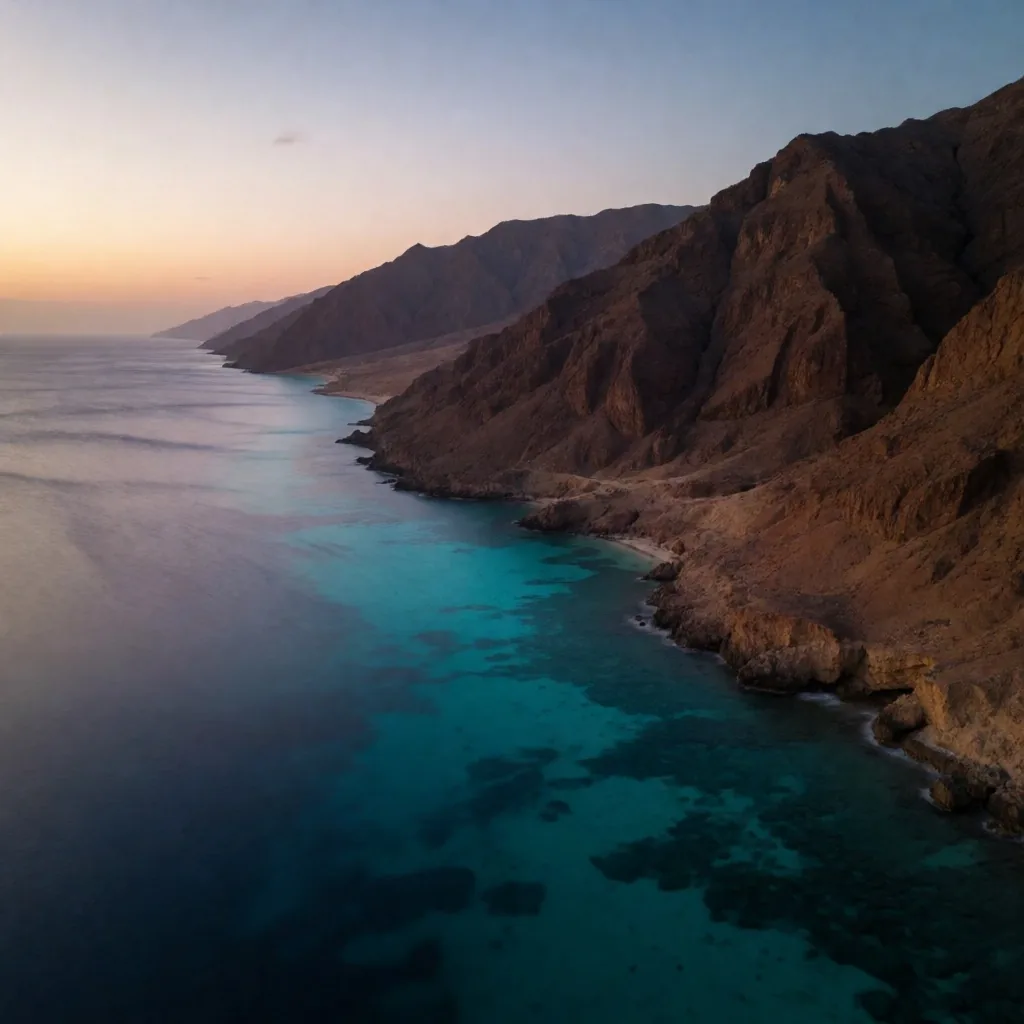
The eastern coast is dominated by the Red Sea, a body of water known for its high salinity and exceptional clarity. The shoreline here is often narrow, squeezed between the rugged mountains of the Eastern Desert and the sea itself. This proximity creates a dramatic visual landscape where the red hues of the stone clash with the turquoise of the water.
Explorers can find countless small bays and inlets that host vibrant life just a few meters from the shore. The drop-off is steep in many places, meaning deep water begins close to land, and the contrast between sunlit shallows and the dark blue beyond is visible from the cliffs above. Our egypt travelling guides document the access points, the wind exposure of each bay, and the times of day when the water is calmest.
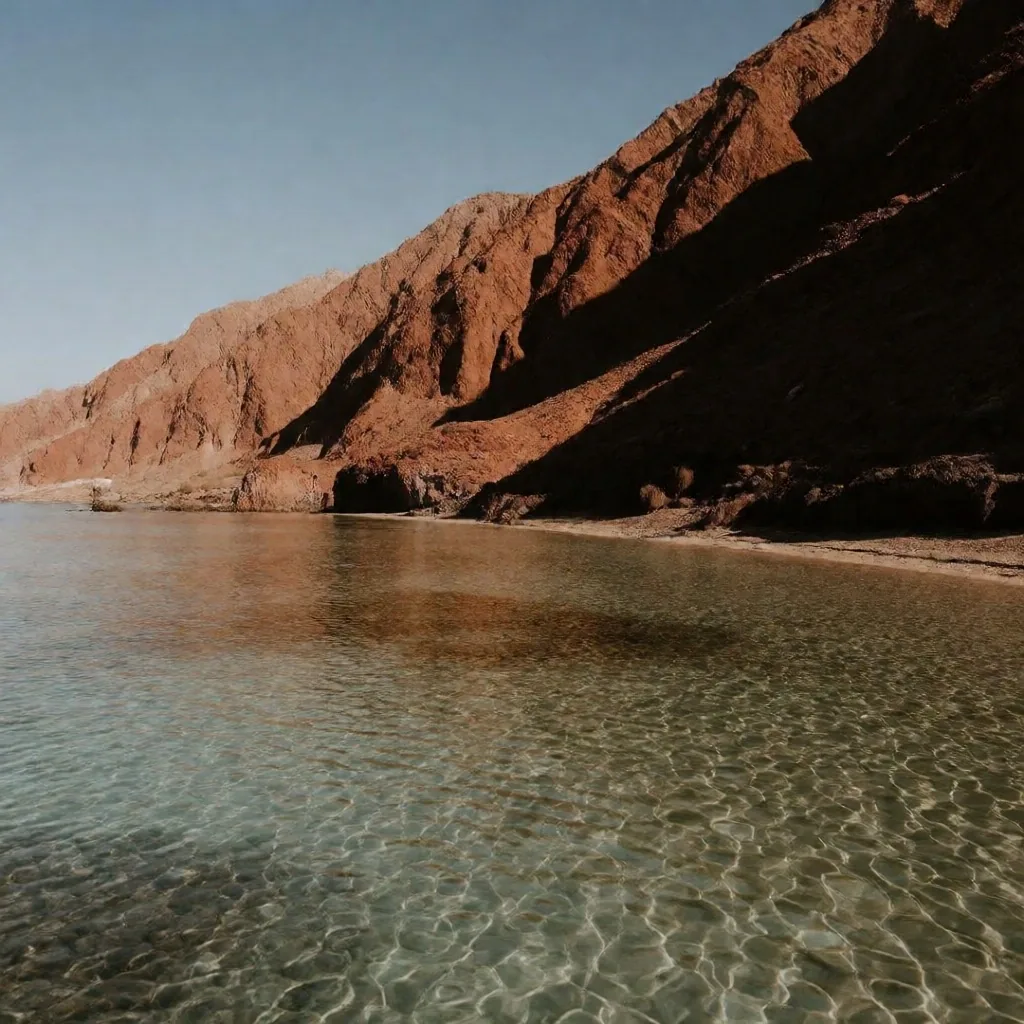
Eastern Desert meets the Red Sea — the shoreline narrows to a few meters in places
Marine Biodiversity
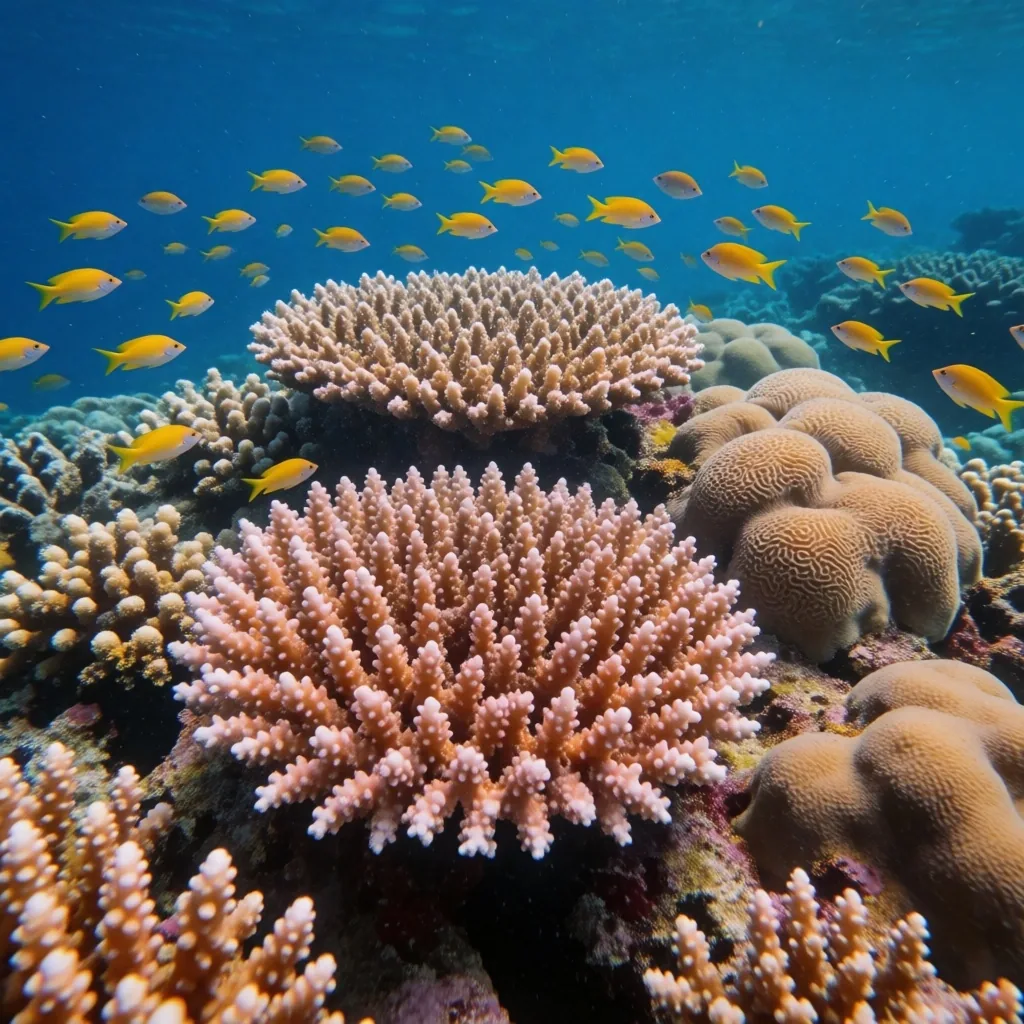
Beneath the surface of the coastal waters lies a world of immense biological complexity. The coral reefs here are among the most resilient on the planet, hosting thousands of species of fish and invertebrates. Our travel guides emphasize the importance of observing this life without disturbing the fragile balance of the reef.
Many of these areas are protected zones where the natural environment is kept in its original state, providing a unique look at underwater wildness. The reefs closest to shore are often the most accessible, but they are also the most vulnerable to physical contact. Keeping a respectful distance from coral, using reef-safe sunblock, and avoiding fin kicks near the reef floor all help preserve what makes these sites worth visiting.
Northern Shores
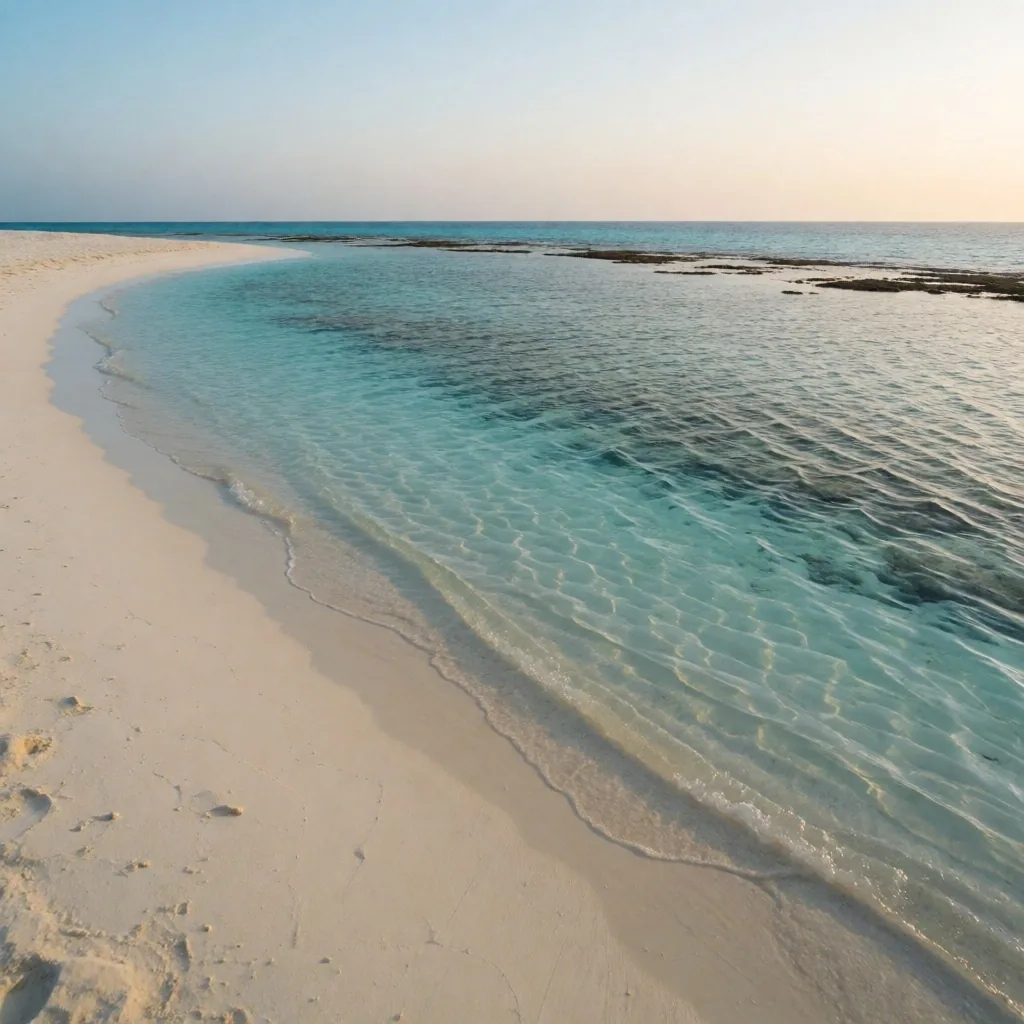
The Mediterranean coast offers a different aesthetic, characterized by long stretches of white sand and temperate waters. This region has a distinct climate, influenced by the sea breezes that cool the land during the hot summer months. The lagoons and salt marshes found along the northern delta are critical habitats for migratory birds and local flora. Travellers will find the pace of life here is deeply tied to the rhythms of the sea.
Long, soft white sand beaches with a gentle slope into temperate water. The sand here is fine and light-colored, a sharp contrast to the darker volcanic shorelines of the east.
Mediterranean breezes moderate the summer heat. Winters are mild and wetter than the Red Sea coast. Morning fog off the lagoons is common in the cooler months.
Salt marshes and shallow lagoons at the delta attract migratory birds in autumn and spring. Flamingos, herons, and terns pass through in large numbers during migration season.
The Mangrove Forests
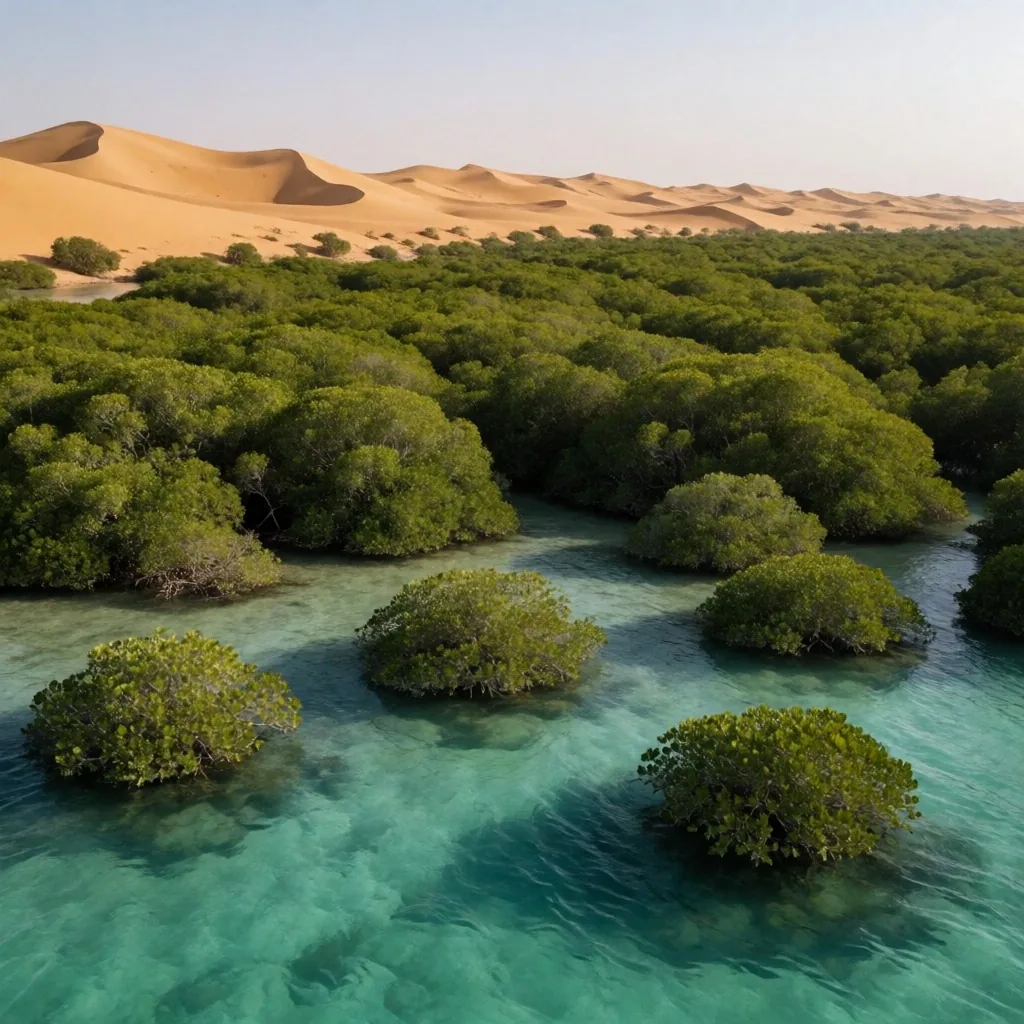
In certain southern coastal regions, rare mangrove forests thrive in the brackish water where the desert meets the sea. These forests are vital for coastal protection and serve as nurseries for various marine species. They are a unique feature of the local geography and provide a fascinating study in environmental adaptation.
We guide you to these areas where you can witness a green fringe against the stark desert backdrop. The mangroves here are among the northernmost stands of their kind in the Indian Ocean ecosystem. Their root systems stabilize the shoreline against wave action, and the sheltered water beneath them harbours juvenile fish before they move to the open reef. Visiting requires care — the soil around the roots is soft, and trampling damages the seedlings that sustain the forest.
Wind and Water Sports
The coastal regions are famous for their consistent winds, making them world-class locations for activities like windsurfing and kitesurfing. The thermal winds created by the temperature difference between the sea and the land provide reliable conditions for much of the year. Our travel guides highlight the best natural bays where the water is calm and the wind is steady.
These locations offer a perfect blend of physical activity and natural beauty. The most reliable wind window runs from late spring through early autumn, when the land heats faster than the sea and draws in a consistent onshore breeze. Mornings tend to be calm, making them better for swimming or paddling, while the wind builds through the afternoon and peaks in the hours before sunset. The broad, shallow bays of the northern Red Sea are particularly well suited to beginners because the water inside the reef stays flat even when the wind above is strong.
Late spring through early autumn. Thermal winds build from midday and peak before sunset.
Shallow bays inside the reef stay flat even when the wind above is strong. Mornings are generally still.
Reef-safe sunblock, a long-sleeve rash guard, and a hat. Reflective glare off the water is intense even on overcast days.
Coastal Canyons of Sinai
In the Sinai region, the coastal mountains are etched with deep canyons that lead directly to the sea. These geological formations were carved by water over thousands of years and offer spectacular hiking opportunities. Walking through these narrow passages of colored stone reveals the power of erosion and the geological history of the peninsula.
Emerging from a shaded canyon onto a bright coastal beach is one of the most iconic experiences for any traveller into Egypt. The canyon floors are cooler than the open coast by several degrees, and the rock walls display layers of sandstone and granite in tones of rust, ochre, and deep grey. Some passages are wide enough to walk through comfortably, while others narrow to shoulder width and require careful footing over loose stone. The best time to enter is early morning, before the sun reaches the canyon floor and while the light on the rock walls is at its warmest.
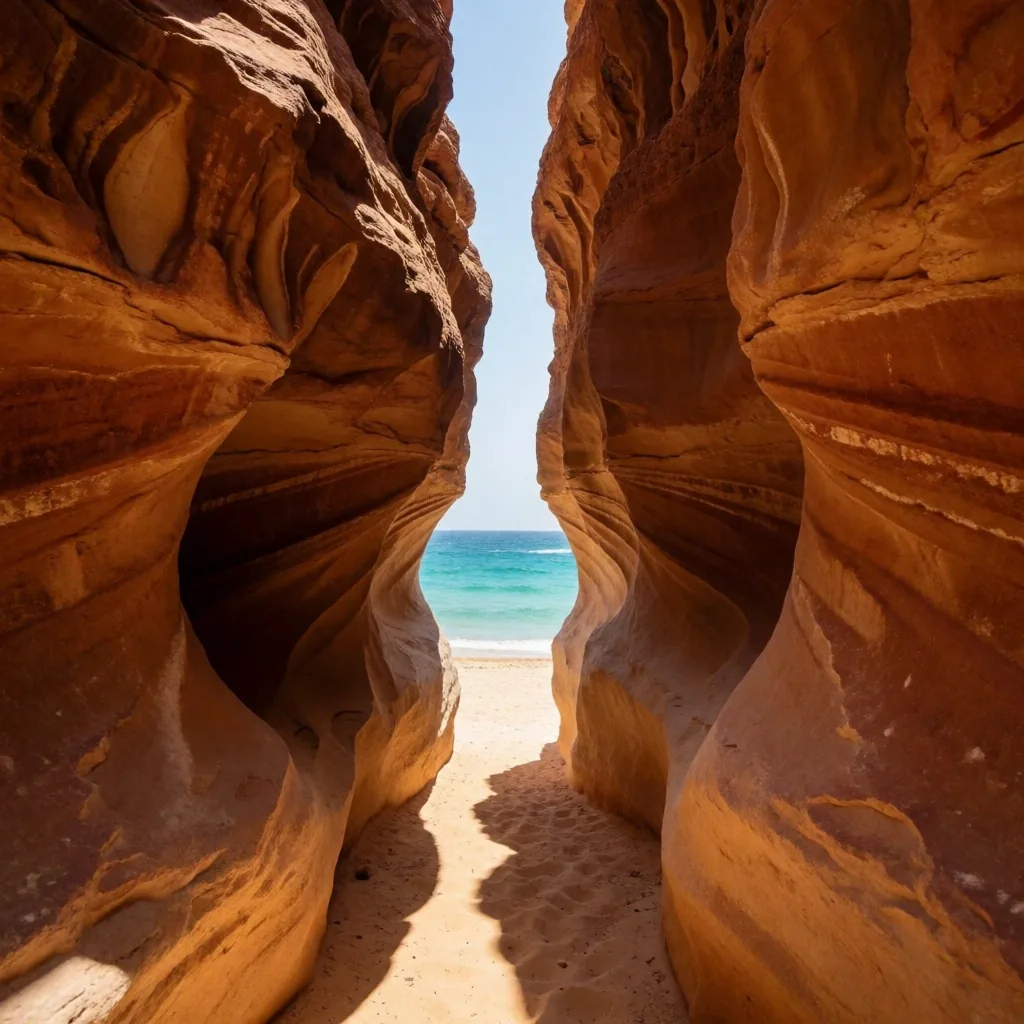
Sinai canyon — passages carved by seasonal water over thousands of years
Islands, Villages, and Stone
Offshore sanctuaries
Just off the coast lie numerous uninhabited islands that offer a true sense of isolation and adventure. These islands are often surrounded by the most pristine coral gardens and are accessible by local sailing vessels. They provide a sanctuary for those looking to escape the more populated coastal areas.
Our egypt travelling guides provide the logistics for reaching these offshore gems while respecting their protected status. Some islands are closed during nesting season, and landing is restricted to designated points to avoid disturbing seabird colonies.
Maritime heritage
The culture of the coast is inextricably linked to the sea, with many small communities still practicing traditional fishing methods. Observing the daily life of these villages offers insight into the maritime heritage of the region. The construction of boats and the mending of nets are skills passed down through generations.
Engaging with these communities allows the traveller to see a side of the coast that is often missed by those staying in modern developments. The morning fish market, the boatyard where wooden hulls are repaired, and the evening gathering on the shore all follow a rhythm set by the tide and the season.
The shore as archive
The interaction between the sea and the land has created fascinating rock formations along the coastline. From sea caves to natural arches, the erosive power of the Mediterranean and the Red Sea is on full display. These spots are perfect for photography and for studying the different layers of sedimentary and volcanic rock.
We point you toward the most visually striking sections of the coast where geology takes center stage. Tides and wave action continue to reshape these features, so a sea arch that stands today may look different on your next visit — part of what makes the coastline feel alive rather than fixed.
Sustainable Coastal Travel
Protecting the marine environment is a priority for anyone visiting these fragile ecosystems. We promote practices such as using reef-safe sunblock and avoiding all physical contact with coral. Many coastal areas are part of managed environmental parks that require visitors to follow specific rules to ensure conservation.
Our travel guides provide the necessary information to help you enjoy the coast responsibly and sustainably. The cumulative impact of visitors is real — even light physical contact with coral can damage the living tissue, and chemical sunblock washes off in the water and lingers on the reef. The coastlines described in these pages are worth protecting precisely because they remain in something close to their natural state.
Choose mineral-based sunblock without oxybenzone. Apply it at least 20 minutes before entering the water.
Keep fins, hands, and feet off the reef. Even a light touch can damage coral tissue that takes years to recover.
Managed areas have designated access points and restricted zones. Follow posted signs and local guidance at all times.
Plan your coastal route
The coastline is long and varied. Use these related guides to narrow down where to go, what to prepare, and how to travel responsibly along the shore.